
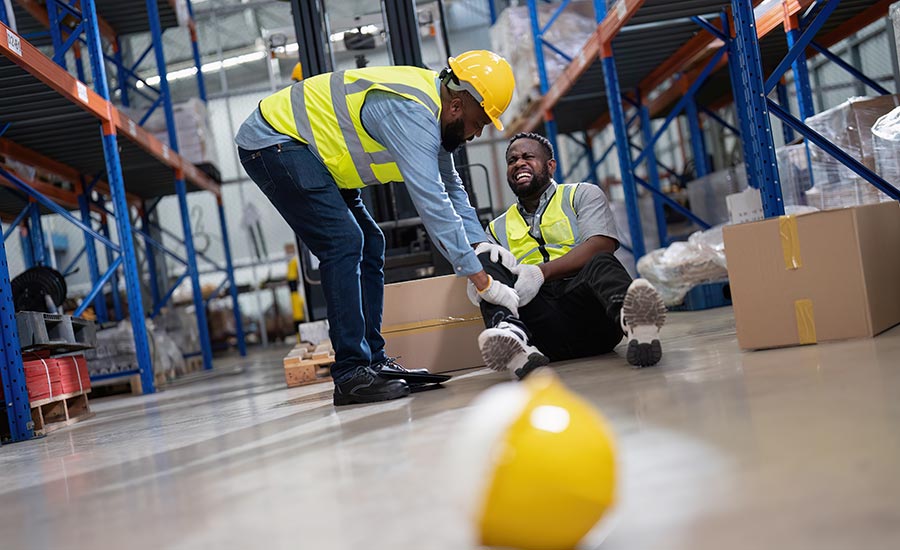
Workplace safety incidents involving collisions between industrial equipment and pedestrians are a significant and often overlooked source of human suffering and economic loss. In industries ranging from transport and logistics to manufacturing and construction, the interaction between mobile equipment and workers or bystanders creates high‑risk environments. Globally, occupational health and safety data show that heavy equipment–related incidents contribute substantially to fatal and non‑fatal injuries in industrial settings. According to the U.S. Occupational Safety and Health Administration (OSHA), heavy equipment incidents account for tens of thousands of serious injuries and dozens of fatalities annually, underscoring the magnitude of the risk when machinery and pedestrians occupy the same operational space.
In East Africa, the broader context of pedestrian safety highlights the severe consequences of collisions between vehicles and people. Road traffic crash data show a persistent and escalating burden of pedestrian fatalities and injuries. In Kenya, for example, road safety authorities reported that pedestrians accounted for the largest share of road fatalities, with over 1,500 pedestrian deaths in one recent year and more than 10,000 serious injuries among all road users. Similarly, in the Greater Kampala Metropolitan Area in Uganda, pedestrian traffic crashes constituted a substantial proportion of all road traffic injuries, with estimates indicating that nearly half of reported traffic injuries involved pedestrians. These figures illustrate the broader risk exposure faced by pedestrians in traffic environments, which parallels the hazards encountered in industrial settings where vehicles and heavy equipment operate in proximity to people.
The economic costs of pedestrian collisions are significant. In Kenya, road traffic injuries, many of which involve pedestrians, have been estimated to impose annual healthcare costs of approximately KSh 46.1 billion, reflecting treatment, emergency response, rehabilitation and long‑term care needs. That figure does not capture the full societal impact, including lost productivity, disability, and the economic burden on families and employers. In Uganda, studies of traffic crashes involving pedestrians have found that long hospital stays, disability and lost income exacerbate socio‑economic hardship, particularly among low‑income populations. These patterns underscore that the consequences of collisions extend far beyond immediate medical costs.
When industrial equipment strikes a pedestrian, the economic and human costs are often amplified by additional factors. In addition to direct medical expenses and compensation liabilities, employers may incur production downtime, equipment repair costs, legal and regulatory penalties, increased insurance premiums, and reputational damage. A collision that incapacitates a skilled worker can significantly disrupt operations, particularly for small and medium enterprises where workforce continuity is critical. Although detailed regional data on equipment–pedestrian collisions in industry are limited in East Africa, the known scale of road traffic‑related pedestrian injuries provides a reasonable proxy for understanding the severity of such incidents where vehicles and people interact in operational spaces.
The human cost is equally profound. Pedestrian collisions can lead to permanent disability or death, depriving families of breadwinners and burdening households with long‑term care responsibilities. In East Africa, where many pedestrians rely on walking as their primary mode of transport and where industrial zones often lack adequate safety infrastructure, the risk to workers and the public is heightened.
Addressing this challenge requires a comprehensive approach to industrial safety. Key elements include rigorous risk assessments, strict enforcement of occupational health and safety standards, investment in pedestrian segregation and walkways within industrial sites, vehicle speed control measures, visibility enhancements for both equipment operators and pedestrians, and robust training programs for all staff. Employers should also adopt technology‑aided solutions, such as proximity detection systems and zone warning systems, to reduce the likelihood of collisions in busy operational environments.
In conclusion, equipment–pedestrian collisions in industrial settings represent a substantial hidden cost, human, social and economic. The available data from East Africa underscore the scale of pedestrian injury and fatality in transport contexts, which in industrial environments often mirrors similar risk dynamics. Effective safety investment is therefore not merely a regulatory obligation but a strategic priority that protects human life, preserves productivity and mitigates economic loss.


