
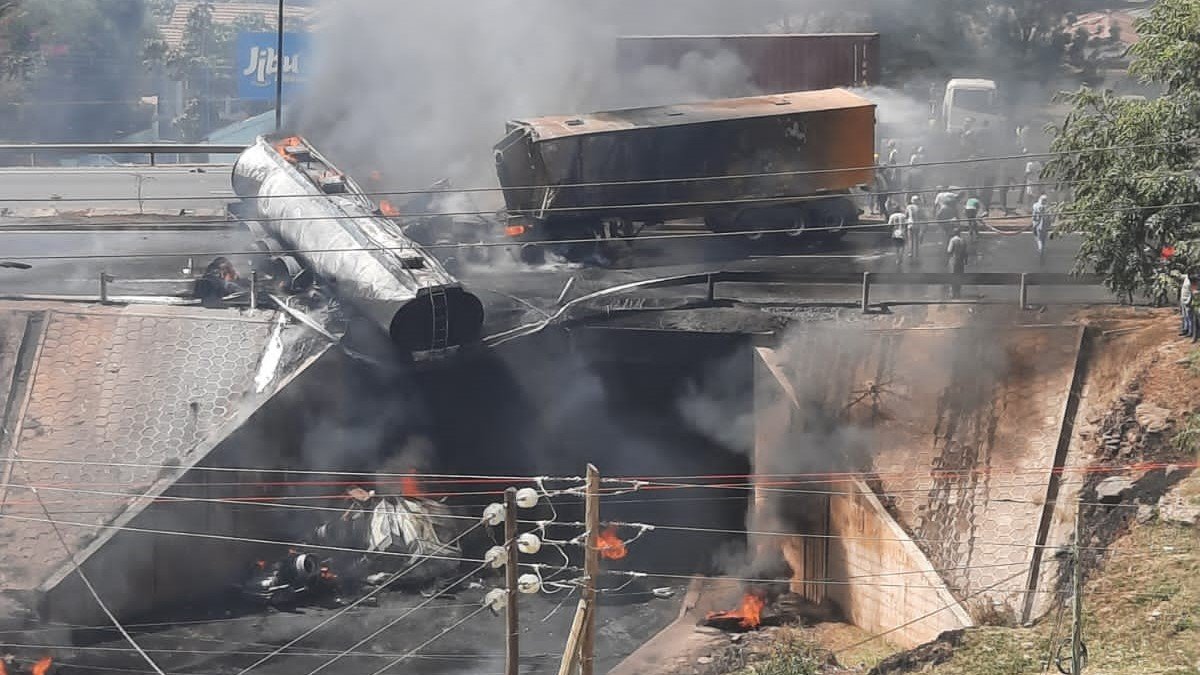
On January 24, 2026, a fuel tanker accident on Nairobi’s Southern Bypass near the Swaminarayan Tunnel Bridge resulted in one fatality and a massive fire that destroyed multiple vehicles. Reports indicate the tanker lost control after hitting a pavement, swerved to avoid a stationary truck, and collided with an oncoming vehicle. The impact triggered several fuel-related explosions, producing thick smoke and flames that engulfed nearby parked vehicles. Emergency responders, including the Kenya Red Cross, Kenya National Highways Authority (KeNHA), police, and fire crews, worked to contain the blaze, restore safety, and reopen the road after assessing the structural integrity of the bridge.
This incident underscores the extreme risks associated with long-distance transport of hazardous materials and highlights the urgent need for technologies that can prevent such accidents.
Advanced Driver Assistance Systems (ADAS) offer practical solutions to enhance road safety for heavy trucks and tankers. These technologies alert drivers to potential hazards and, in some cases, take preventive action to avoid collisions. For long-haul drivers, who often face fatigue, variable road conditions, and high-pressure schedules, ADAS can significantly reduce the risk of human error.
Key ADAS technologies relevant to heavy trucks and tankers include lane departure warning and lane keep assist, which detect unintentional lane drift and can actively steer the vehicle back into position. Forward collision warning combined with automatic emergency braking monitors distances to vehicles ahead and can automatically slow the truck if a collision is imminent. Blind spot detection and side collision avoidance use sensors to monitor areas the driver cannot easily see, preventing unsafe lane changes or evasive maneuvers. Driver fatigue monitoring systems track behaviors such as steering patterns or eye movements and can prompt timely rest breaks. Adaptive cruise control maintains safe following distances on highways, reducing rear-end collision risks during long journeys.
Specialized aftermarket technologies can further enhance tanker safety. Tyre pressure monitoring systems alert drivers to under-inflated or overheating tyres, preventing blowouts. Onboard weight and load distribution monitoring ensures cargo balance, reducing the risk of rollovers or loss of control. 360-degree camera systems with object recognition improve visibility in congested or complex environments such as toll plazas and urban bypasses. Real-time telematics and geo-fencing platforms provide fleet managers with actionable insights into vehicle speed, route adherence, and driver behavior, while enforcing operational limits automatically.
The economic and human costs of tanker accidents are substantial. Beyond direct damage to vehicles, fires, and infrastructure, collisions involving hazardous cargo pose environmental risks and can result in loss of life, disability, and long-term reputational harm for companies. Operational disruptions, emergency response costs, insurance claims, and regulatory scrutiny further compound these impacts.
Integrating ADAS and aftermarket safety technologies is therefore a strategic imperative for operators of long-distance fleets. These systems reduce collision frequency and severity, enhance driver confidence, minimize downtime, improve compliance, and protect both human life and corporate assets. For petroleum tankers, which carry highly flammable cargo, the preventive value of such technologies cannot be overstated.
The Nairobi fuel tanker incident illustrates that while human error remains a central cause of accidents, technology can play a decisive role in prevention. By adopting ADAS and supporting systems, fleet operators can proactively mitigate risks, safeguard drivers, and enhance public safety. Stakeholders in East Africa’s transport sector, from fleet operators and insurers to regulators and OEMs, must prioritize technology adoption and embed it into comprehensive safety management frameworks. Investing in these solutions is not simply a matter of compliance; it is an investment in lives, operational efficiency, and the sustainable growth of the transport industry.