
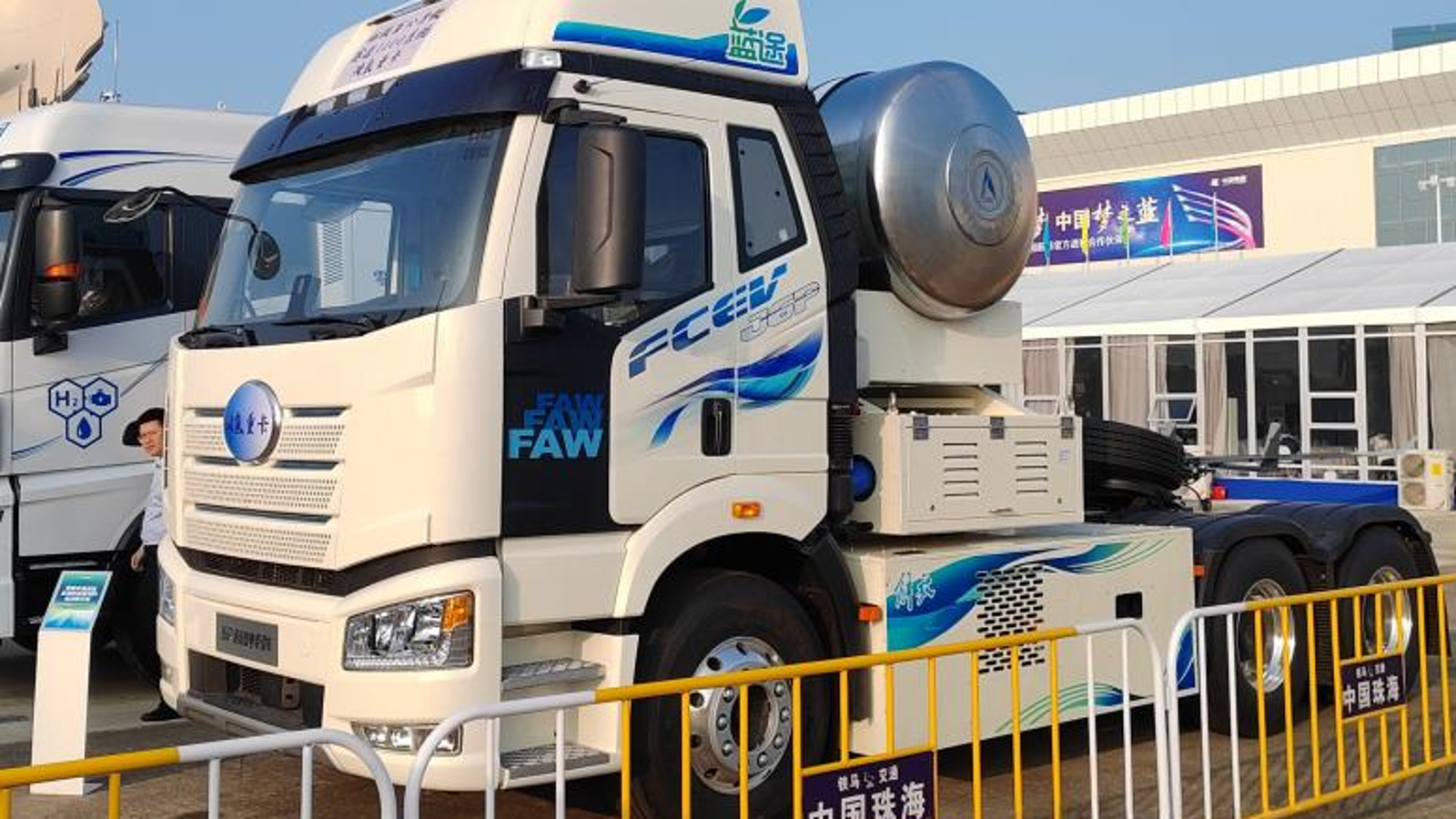
In a milestone for heavy-duty logistics and decarbonization, FAW Trucks has launched public-road demonstration operations of its liquid hydrogen-powered heavy truck, achieving a driving range in excess of 1,000 kilometers on a single refill. This marks the first time a liquid hydrogen heavy truck has been tested in real operational conditions, demonstrating that the technology can meet the demands of long-haul transport beyond controlled environments.
At the core of this breakthrough is an advanced combination of engineering innovations. The truck features cryogenic tanks capable of safely storing liquid hydrogen at extremely low temperatures, providing significantly higher energy density than compressed gas and enabling the class-leading range. Its high-power fuel cell converts hydrogen into electricity, producing only water as a by-product and ensuring zero tailpipe emissions. The vehicle is built on the proven J6P chassis platform, which has been validated over millions of operational kilometers, and is integrated with China’s first civilian liquid hydrogen refueling station, demonstrating both safety and operational feasibility across production, storage, and dispensing.
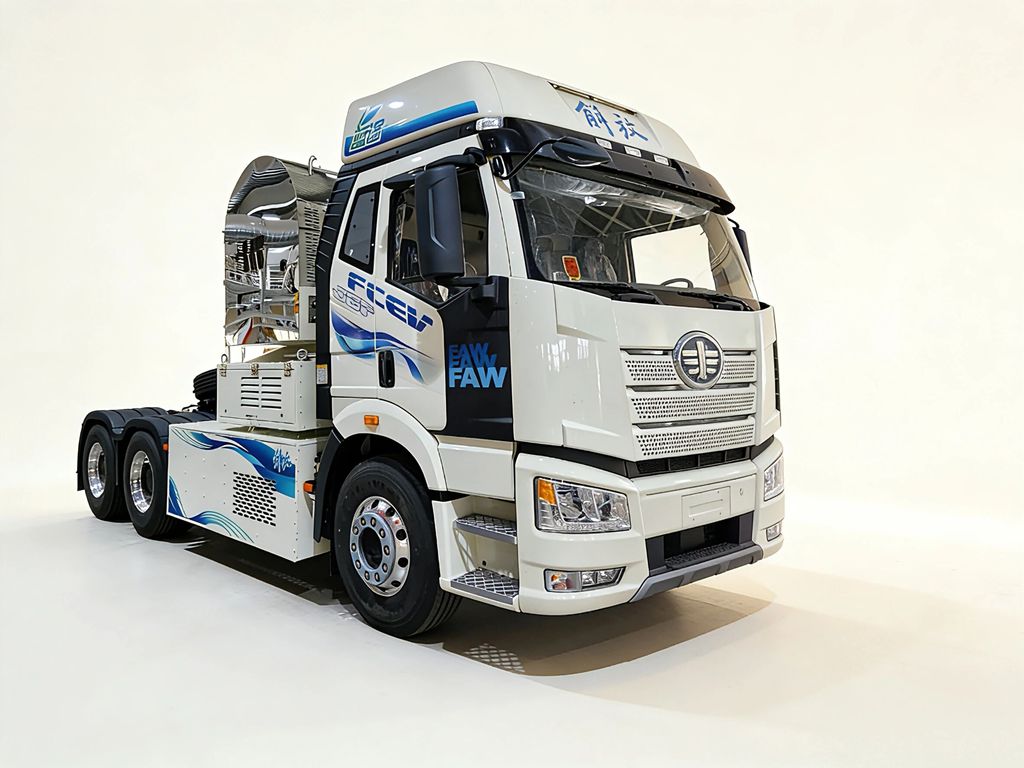
When compared to diesel and battery-electric counterparts, liquid hydrogen trucks offer a unique balance of range, operational flexibility, and environmental performance. Diesel trucks provide longer ranges and widespread refueling infrastructure but emit CO₂ and particulates. Battery-electric trucks achieve zero emissions but face range limitations, long recharge times, and reduced payload capacity due to battery weight. Liquid hydrogen trucks bridge this gap, providing a range comparable to diesel with fast refueling and full operational payload, while eliminating emissions. This combination addresses two critical barriers for zero-emission haulage: range anxiety and refueling practicality.
The implications for long-haul logistics are significant. Real road tests confirm that hydrogen heavy trucks can deliver consistent performance even over challenging terrain. As global carriers face increasing pressure to decarbonize, liquid hydrogen offers a credible pathway to zero-emission long-haul operations. The demonstration also illustrates that the infrastructure needed to support hydrogen vehicles—from production to refueling—is beginning to take shape, moving the technology from concept to commercial viability.
Translog Group is closely monitoring these developments as they have direct relevance for fleet operators and logistics strategies in Africa. Our teams are analyzing hydrogen infrastructure readiness along key corridors and advising carriers on transition pathways that combine diesel optimization today with readiness for emerging zero-emission technologies tomorrow. By fostering partnerships between OEMs, fuel suppliers, and logistics stakeholders, Translog is helping to prepare the market for the strategic adoption of hydrogen technology in cargo transport.
The FAW liquid hydrogen truck represents more than a technological milestone; it signals a strategic shift in the logistics industry. For freight operators and fleet managers, the question is no longer if hydrogen will play a role in long-haul transport, but how soon and how strategically it can be adopted to achieve both operational efficiency and sustainability objectives.


